Hepatoprotective Potentials of the Extract and Fractions of Brenania brieyi (De Wild) (Rubiaceae) against Carbon tetrachloride Induced Liver Damage in Rats
DOI:
https://doi.org/10.59493/advpbl/2024.1.3Keywords:
Brenania brieyi; Silymarin; Hepatoprotective potentials; Carbon tetrachloride; liver damage; liver enzymes; biochemical parametersAbstract
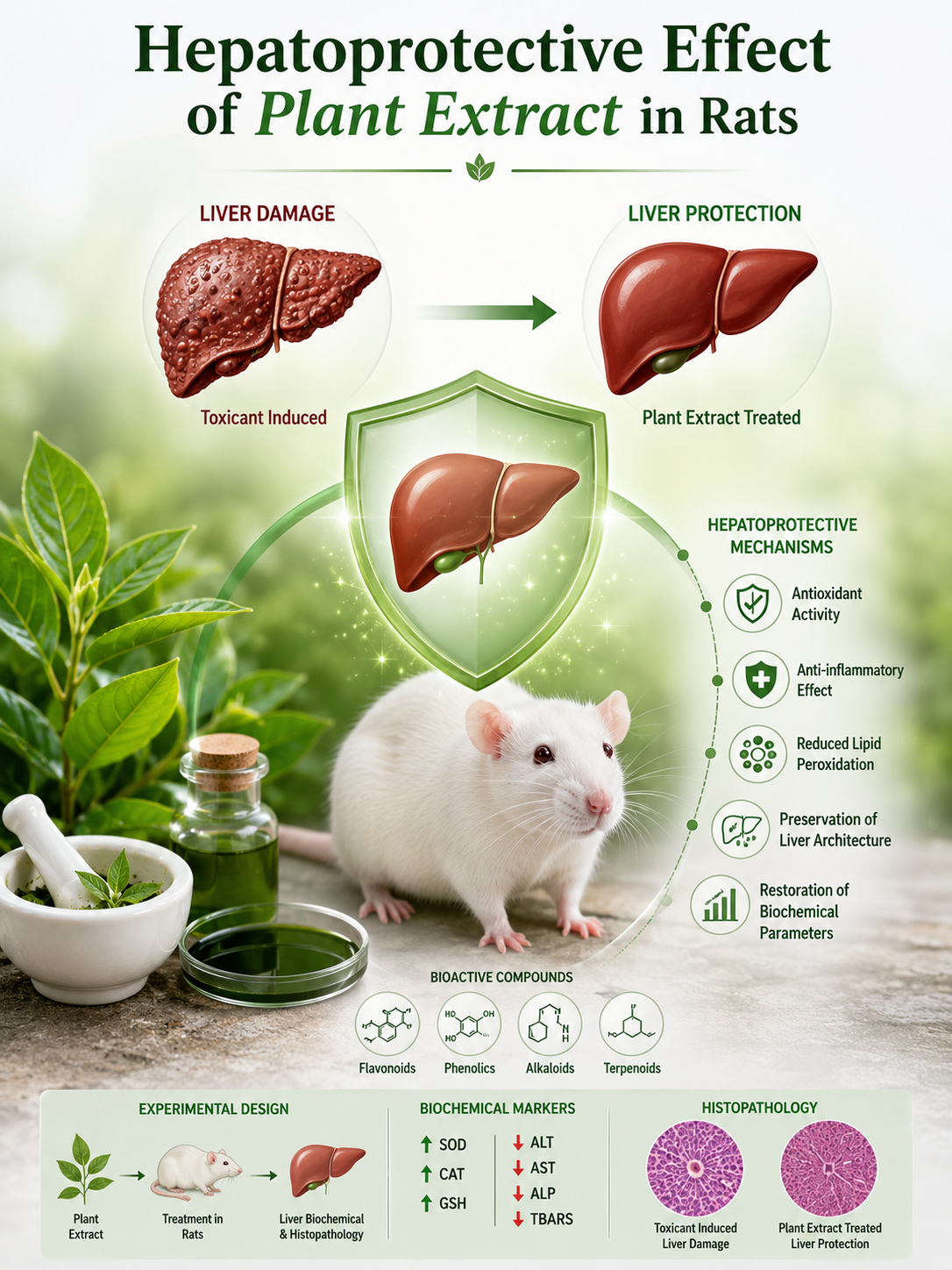
Brenania brieyi (De Wild), a plant from the Rubiaceae family, has been traditionally used in treating various illnesses, especially for treating liver disorders. This study aims to verify the hepatoprotective properties of the extract and fractions of B. brieyi against carbon tetrachloride-induced liver damage in rats and compare it with the positive control (Silymarin) using the protective model. The plant material was extracted using cold maceration and fractionated with n-hexane, ethyl acetate and methanol to get different fractions. Phytochemical constituents were determined using the Gas Chromatography-Flame Ionization Detection (GC-FID) method. Hepatoprotective activity and Histopathology studies were evaluated using standard procedures in determining biochemical parameters such as alkaline phosphatase (ALP), aspartate transaminase (AST), alanine transaminase (ALT), Acid Phosphatase (ACP), albumin bilirubin, urea, creatinine, and total protein. The extract and fractions were shown to be rich in flavonoids, glycosides, alkaloids, saponins, tannins and steroids. The results demonstrated that 200 mg/kg of the extract significantly (p<0.05) reduced the levels of ALT, AST, and ALP from (46.60±2.08, 74.80±1.59 and 97.40±1.32 IU/L) to (23.20±1.02, 38.40±0.51 and 46.40±0.81 IU/L) respectively compared to (24.20±0.66, 37.20±1.15 and 48.40±0.81 IU/L) reduction obtained from the positive control (Silymarin 25 mg/Kg), indicating its hepatoprotective potentials. At 400 mg/kg the extract significantly reduced (p<0.05) the levels of AST (20.80±0.58), AST (36.80±0.73), and ALP (48.40±0.81) when compared with Silymarin. The study validates the traditional use of B. brieyi for treating liver disorders, showing that its extract and fractions have a dose-dependent effect in reducing the levels of ALT, AST, ALP, and other enzymes in carbon tetrachloride-induced liver damage in rats.
References
Zhang G, Wang X, Chung TY, Ye W, Hodge L, Zhang L, Wang YJ, 2020. Carbon tetrachloride (CCl4) accelerated development of non-alcoholic fatty liver disease (NAFLD)/steatohepatitis (NASH) in MS-NASH mice fed western diet supplemented with fructose (WDF). BMC Gastroenterology, 20 (1): 339.
Wang S, Luan JJ, Lv XW, 2019. Inhibition of endoplasmic reticulum stress attenuated ethanol-induced exosomal miR-122 and acute liver injury in mice. Alcohol and Alcoholism, 54: 465–471.
Wang Y, Wang R, Li F, Wang Y, Wang X, 2023. Flavonoids and gut microbiota: A review of their interactions and neuromodulatory effects. Journal of Agricultural and Food Chemistry, 12 (2): 320.
Cohen JC, Horton JD, Hobbs HH, 2011. Human fatty liver disease: old questions and new insights. Science, 332 (6037): 1519-1523.
Shaker M, Tabbaa A, Albeldawi M, Alkhouri N, 2014. Liver transplantation for nonalcoholic fatty liver disease: new challenges and new opportunities. World Journal of Gastroenterology, 20 (18): 5320-5330.
Kwo PY, Cohen SM, Lim JK, 2017. ACG Clinical Guideline: Evaluation of Abnormal Liver Chemistries. The American Journal of Gastroenterology, 112 (1): 18–35. https://doi.org/10.1038/ajg.2016.517
Pouwels S, Sakran N, Graham Y, Leal A, Pintar T, Yang W, Kassir R, Singhal R, Mahawar K, Ramnarain D 2022. Non-alcoholic fatty liver disease (NAFLD): a review of pathophysiology, clinical management and effects of weight loss. BMC Endocrine Disorders, 22 (1): 63. 36 https://doi.org/10.1186/s12902-022-00980-1
Cross TJS, 2017. Liver Disease in Clinical Practice, 1st ed., Springer International Publishing. Pp 394. ISBN-13 978-3319431253, DOI:10.1007/978-30319-43126-0
Shaker M, Tabbaa A, Albeldawi M, Alkhouri N, 2014. Liver transplantation for nonalcoholic fatty liver disease: new challenges and new opportunities. World Journal of Gastroenterology, 20 (18): 5320-5330.
Gupta R, Jain M, Gupta SS, 2021. Risk factors for chronic liver disease in the population of Central India: a hospital-based study. Egyptian Liver Journal, 11 (1). doi:10.1186/s43066-021-00077-9
Singh D, Cho WC, Upadhyay G, 2016. Drug-Induced Liver Toxicity and Prevention by Herbal Antioxidants: An Overview. Frontiers in Physiology, 6: 363. doi:10.3389/fphys.2015.00363
Lala V, Zubair M, Minter DA, 2023. Liver Function Tests. StatPearls. Retrieved from https://www.ncbi.nlm.nih.gov/books/NBK482489/
Kumar P, Clark M, 2021. Kumar and Clark’s Clinical Medicine. In StatPearls. StatPearls Publishing. https://www.ncbi.nlm.nih.gov/books/NBK535438/
Macpherson I, Nobes JH, Dow E, Furrie E, Miller MH, Robinson EM, Dillon JF, 2020. Intelligent Liver Function Testing: Working Smarter to Improve Patient Outcomes in Liver Disease. The Journal of Applied Laboratory Medicine, 5 (5): 1090-1100. https://doi.org/10.1093/jalm/jfaa109
Ducatman A, Tan Y, Nadeau B, Steenland K 2023. Perfluorooctanoic Acid (PFOA) Exposure and Abnormal Alanine Aminotransferase: Using Clinical Consensus Cutoffs Compared to Statistical Cutoffs for Abnormal Values. Toxics, 11 (5): 449. https://doi.org/10.3390/toxics11050449
Feng G, Zheng K I, Yan Q.-Q, Rios RS, Targher G, Byrne CD, Van Poucke S, Liu W-Y, Zheng M-H, 2020. COVID-19 and Liver Dysfunction: Current Insights and Emergent Therapeutic Strategies. Journal of Clinical and Translational Hepatology, 8 (1): 18–24. https://doi.org/10.14218/JCTH.2020.00018
Guerra Ruiz AR, Crespo J, López Martínez RM, Iruzubieta P, Casals Mercadal G, Lalana Garcés M, Lavin B, Morales Ruiz M, 2021. Measurement and clinical usefulness of bilirubin in liver disease. Advances in Laboratory Medicine/Avances en Medicina de Laboratorio. 2 (3): 352-372. https://doi.org/10.1515/almed-2021-0047
Fevery J, 2008. Bilirubin in clinical practice: a review. Liver International, 28: 592-605. https://doi.org/10.1111/j.1478-3231.2008.01716.x
Vítek L, 2019. Bilirubin as a predictor of diseases of civilization. Is it time to establish decision limits for serum bilirubin concentrations? Archives of Biochemistry and Biophysics, 672: 108062. https://doi.org/10.1016/j.abb.2019.108062
Jagdish RK, Maras JS, Sarin SK, 2021. Albumin in Advanced Liver Diseases: The Good and Bad of a Drug! Hepatology.74 (5): 2848-2862 https://doi.org/10.1002/hep.31836
Gleason JM, Peairs KS, McDaniel K, Farrow GM, Holzbeierlein JM, 2017. Association between acid phosphatase-positive cells in bone marrow aspirates and improved overall survival in patients with metastatic prostate cancer. Urology, 109: 161-165.
Derosa Y, Zubir N, Arnelis R, 2022. The Differences of T-Regulator Cells, Alanine Aminotransferase Serum and Aspartate Aminotransferase Between Hepatitis B Chronic Patients with and without Liver Fibrosis. The Indonesian Journal of Gastroenterology, Hepatology, and Digestive Endoscopy, 22(2): 116-122. https://doi.org/10.24871/2222021116-123
Dhaunsi GS, Singh A, Singh I, Siddiqui MS, 2012. Recent advances in urea metabolism. World Journal of Clinical Biochemistry, 3(4): 92-97.
Wu AH, French D, Ordonez J, Kendrick J, 2015. Comparison of methods for determining urine albumin and total protein in proteinuria patients. Journal of Clinical Laboratory Analysis, 29(3): 187-193.
Vasco SJ, Padron- Monedero A, Bikbov B, 2024. The state of health in the European Union (E-27) in 2019: a systemic analysis for the Global Burden of Disease study 2019. BMC Public Health, doi:10.1186/s12889-024-18529-3.
Moon AM, Singal AG, Tapper EB, 2019. Contemporary Epidemiology of Chronic Liver Disease and Cirrhosis. Clinical Gastroenterology and Hepatology, 18(12): 2650-2666. https://doi.org/10.1016/j.cgh.2019.07.060
Polyak SJ, Morishima C, Shuhart MC, Wang CC, Liu Y, Lee DY, 2013. Inhibition of T-cell inflammatory cytokines, hepatocyte NF-κB signaling, and HCV infection by standardized Silymarin. Gastroenterology, 144(5): 1031-1040.e1. https://doi.org/10.1053/j.gastro.2013.01.043
An Introduction to the Trees from the North of the Republic of Congo. 2023. Brenania brieyi. Retrieved July 19, 2023, from https://congotrees.rbge.org.uk/species/details/brenania-brieyi
Chukwuma IF, Nkwocha C, Ezeanyika L, Ogugua V, 2017. FTIR and GC-MS Spectroscopic Analysis of Methanol and Chloroform Extracts of Brenania brieyi Root Bark. American Journal of Research Communication, 5(3): 44-54.
Njamen D, Mvondo MA, Djiogue S, Ketcha Wanda GJM, Magne Nde CB, Vollmer G, Zellmer S, 2013. Estrogenic properties of the fruit of Brenania brieyi (De Wild) E.M.A.Petit (Rubiaceae). Journal of Ethnopharmacology, 145(2): 482-486.
Chukwuma EC, Nkwocha C, Ezeanyika LUS, Ogugua VN, 2020. Phytochemical Investigation and In vitro Antioxidant Potency of Root Bark of Brenania brieyi Fractions. Tropical Journal of Natural Product Research, 4(11): 1037-1042. doi:10.26538/tjnpr/v4i11.21
Ezeala IC, Uzor PF, Obiora CU, Enendu CM, Anyadiegwu CI , Nwodo NJ, 2023. Antimicrobial and Antitrypanosomal Activities Of Methanol Root Extract And Fractions Of Brenania Brieyi (De Wild) Petit (Rubiaceae). African Journal of Pharmaceutical Research and Development, 15(3); 43-52.
Ezeala IC, Eze SC, Okoro SI, Uzor PF, Nwodo NJ,2024. Determination of Antimalarial Properties of the Extract and Fractions of Brenania brieyi (Rubiaceae) Root In-Vivo Using Curative Model. Tropical Journal of Natural Product Research, 8(1):6006-6015. http://www.doi.org/10.26538/tjnpr/v8i1.43
Nwiloh B, Uwakwe AA, Akaninwor JO, 2016. Phytochemical screeing and GC-FID analysis of ethanolic extract of root bark of Salacia nitida L. Benth. Journal of Medicinal Plants Studies, 4(6): 283-287.
Lorke DA, 1983. New Approach for Acute Toxicity Testing. Arch. Toxicology, 54: 275-287.
Japanese Society of Gastroenterology and Japan Society of Hepatology, 2021. Evidence-based clinical practice guidelines for Liver Cirrhosis. Journal of Gastroenterology, 56(1): 1-105.
Reitman S, Frankel S, 1957. A Colorimetric Method for the Determination of Serum Glutamic Oxalacetic and Glutamic Pyruvic Transaminases. American Journal of Clinical Pathology, 28: 56-63.
Burtis C, Ashwood R, 1994. Tietz textbook of clinical chemistry, W.B Saunders company, Philadelphia.
Schmidt E, 1963. “Liver Enzymes”. Enzymology Biology Clinical , 3(1): 11-14.
Babson AL, Greeley SJ, Coleman CM, Phillips GE, 1966. Phenolphthalein monophosphate as a substrate for serum alkaline phosphatase. Clinical Chemistry, 12(8): 482-90. PMID: 5917856.
Haenseler E, 1997. A new assay for the Reflotron system: Alkaline Phosphatase activity. In Poster presented at the med ib 97,12th IFCC European congress of clinical chemistry, Basel, Switzerland.
Tietz NW, 1994. Tietz Textbook of Clinical Chemistry, Saunders 2326 pages. ISBN; 0721644724, 9780721644721
Tietz, NW, 1995. Clinical Guide to Laboratory tests. 3rd ed. Philadelphia. WB. Saunders, 268-273.
Bancroft JD, Gamble M, 2002. Theory and Practice of Histological Techniques,5th ed., Churchill Livingstone Pub. Edinburgh., pp 172-5, pp 593-620.
Ugoeze KC, Oluigbo KE, Chinko BC, 2020. Phytomedicinal and Nutraceutical Benefits of the GC-FID Quantified Phytocomponents of the Aqueous Extract of Azadirachta indica leaves. Journal of Pharmacy and Pharmacology Research, 4(4): 149-163.
Okonkwo-Uzor N.J, Obi C, Enwelum A, Okezie UM, Eze PM, Okoye FBC, Esimone CO, 2022. Antimicrobial and Antioxidant Activities of Secondary Metabolites of an Endophytic fungus of Azadirachta indica. Journal of Drug Delivery and Therapeutics, 12(5-S): 112-117.
Ikezu UJM, Ugariogu SN, 2023. Identification, Quantification of Phytochemicals and Elemental Analysis from Ethanolic Leaf Extract of Andrographis paniculata. South Asian Research Journal of Natural Products, 6(3): 144-156.
Reygaert WC,2018. Green Tea Catechins: Their Use in Treating and Preventing Infectious Diseases. BioMed Research International, 2018: 1–9. https://doi.org/10.1155/2018/9105261
Scazzocchio B, Varì R, Filesi C, D’Archivio M, Santangelo C, Giovannini C, Masella R, 2011. Cyanidin-3-O-β-glucoside and protocatechuic acid exert insulin-like effects by upregulating PPARγ activity in human omental adipocytes. Diabetes, 60(9): 2234-2244.
Breuss J, Atanasov A, Uhrin P, 2019. Resveratrol and Its Effects on the Vascular System. International Journal of Molecular Sciences, 20: 1523. https://doi.org/10.3390/ijms20071523
Ganeshpurkar A, Saluja AK, 2017. The pharmacological potential of Rutin. Saudi Pharmaceutical Journal, 25(2): 149-164.
Ullah A, Sidra M, Syed Lal B , Noreen K , Lubna G , Benjamin GP, Abdul-Hamid E , Mariusz J, 2020. Important Flavonoids and Their Role as a Therapeutic Agent. Molecules, 25(22):5243.
Spanjers CS, Beach CA, Jones AJ, Dauenhauer PJ 2017. Increasing flame ionization detector (FID) sensitivity using post-column oxidation–methanation. Analytical Methods, 9(12): 1910-1916.
Hartogh DJ, Alessandra G, Evangelia T, 2019 Antidiabetic Properties of Curcumin II: Evidence from In Vivo Studies. Nutrients; 12(1):58. DOI: 10.3390/nu12010058
Banjarnahor SDS, Artanti N, 2014 Antioxidant properties of flavonoids. Medical Journal of Indonesia, 23(4): 239-44.
Isaac-Bamgboye FJ, Enujiugha VN, Oluwamukomi MO, 2020. In-vitro Antioxidant Capacity, Phytochemical Characterization, Toxic and Functional Properties of African Yam Bean (Sphenostylis stenocarpa) Seed-Enriched Cassava (Manihot esculenta) Product (Pupuru). European Journal of Nutrition and Food Safety, 12(3): 84-98.
Gutiérrez-Grijalva E, Lopez-Martinez L, Contreras L, Romero CA, Heredia JB, 2020. Plant Alkaloids: Structures and Bioactive Properties. In Plant-derived Bioactives: Chemistry and Mode of Action (pp. 85–117). https://doi.org/10.1007/978-981-15-2361-8_5
Zhao H, Liu M, Liu H, Suo R, Lu C, 2020. Naringin protects endothelial cells from apoptosis and inflammation by regulating the Hippo-YAP Pathway. Bioscience Reports, 40(3):BSR20193431. https://doi.org/10.1042/BSR20193431
Zhou J, Lu X, Tian B, Wang C, Shi H, Luo C, Li X, 2020. A gas chromatography-flame ionization detection method for direct and rapid determination of small molecule volatile organic compounds in aqueous phase. 3 Biotechnology, 10(520). https://doi.org/10.1007/s13205-020-02523-8.
Kaushik N, 2002. Determination of azadirachtin and fatty acid methyl esters of Azadirachta indica seeds by HPLC and GLC. Analytical and Bioanalytical Chemistry, 374(7-8): 1199-1204.
Al-Snafi AE, Mousa HN, Majid WJ, 2019. Medicinal plants possessed hepatoprotective activity. IOSR Journal of Pharmacy, 9(8): 26-56. http://iosrphr.org/papers/vol9-issue8/Series-2/D0908022656.pdf
Li S, Tan H.-Y, Wang N, Zhang Z.-J, Lao L, Wong C.-W, Feng Y, 2015. The role of oxidative stress and antioxidants in liver diseases. International Journal of Molecular Sciences, 16(11): 26087-26124.
Yang FQ, Wang HK, Chen H, Chen JD, Xia ZN, 2011. Fractionation of volatile constituents from Curcuma rhizome by preparative gas chromatography. Journal of Analytical Methods in Chemistry, 2011: 942467. Doi: 10.1155/2011/942467.
Calderón-Montaño JM, Burgos-Morón E, Orta ML, Maldonado-Navas D, García-Domínguez I, López-Lázaro, M, 2014. Evaluating the cancer therapeutic potential of cardiac glycosides. BioMed Research international, 2014: 794930. Doi: 10.1155/2014/794930. .
Giannini EG, Testa R, Savarino V, 2005. Liver enzyme alteration: a guide for clinicians. Canadian Medical Association Journal, 172(3): 367-379.
Karimi G, Vahabzadeh M, Lari P, Rashedinia M, Moshiri M, 2011. Silymarin, a promising pharmacological agent for treatment of diseases. Iranian Journal of Basic Medical Sciences, 14(4): 308-317.
Yamai DW, Mawia AM, Wambua FK, Njoroge A, Matheri F, 2015. Phytochemical Profile of Prunus africana Stem Bark from Kenya. Journal of Pharmacognosy & Natural Products, 1: 111-118.
Chukwuma SR, Okeke CU, Iroka FC, Chukwuma GO, 2020. Phytochemicals and antioxidant activity of methanol and chloroform fractions of the root bark of Brenania brieyi (Hiern) Keay. Journal of Medicinal Plants Research, 14(3): 111-116.
Downloads
Published
How to Cite
Issue
Section
License
Copyright (c) 2024 Ifeyinwa C. Ezeala, Onyinye Ezeala, Philip F. Uzor, Felix I. Nwafor, Anthony C. Ugwuja, Chimdinma E. Okoroafor, Emmanuel J. Uzodi, Ngozi J. Nwodo

This work is licensed under a Creative Commons Attribution 4.0 International License.
All articles published in Advanced Pharmaceutical and Biomedical Letters (AdvPBL) are distributed under an Open Access Creative Commons License BY/4.0. Users are allowed to freely download, read, distribute the materials in any medium or format, remix, reuse the articles or quote the articles, so long as proper attribution is given to the original creators (authors and publishers). Articles may be used for commercial or non-commercial purposes. Users are free to disseminate the work to colleagues or wider scientific community. By submitting their article, the author(s) grant publisher permission to publish, including displaying, storing, copying, and reusing their content.